

Himalayan Arabica Coffee
Pioneering Premium and Specialty Coffee Production in Nepal
A large-scale Arabica coffee platform in Nepal’s coffee-growing highlands that combines irrigation, best-in-class agronomy, integrated processing, and altitude-driven quality.

2,500
Hectares of irrigated Estate
About the Venture
Where the Mountains
Meet the Market
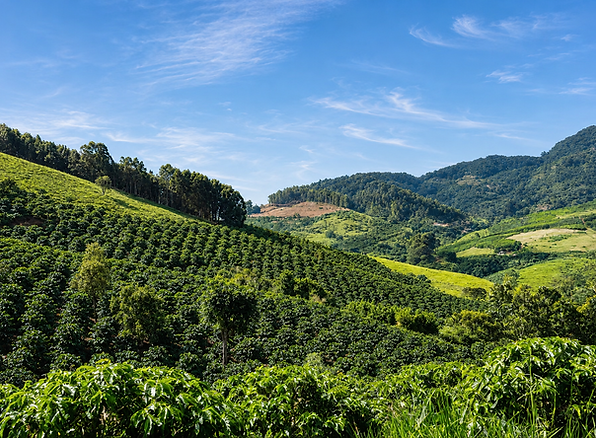
Fifth Season Coffee Estates is being developed as a large-scale, climate-resilient Arabica platform in Nepal’s mid-hill coffee belt. The project combines irrigated nucleus estates, structured farmer integration, decentralized wet mills, and centralized dry milling to build a premium export-oriented origin at meaningful scale.
Rather than relying on a single site, the development model is based on disciplined land selection across multiple districts, with the objective of establishing 2,500 hectares of high-quality production following broader technical screening.
$100M
CapEx Requirement
4,000
Tons of Green Bean Output
2,500
Hectares at Initial Scale
5,000+
Direct and Seasonal Jobs
The Project
A Vertically Integrated
Coffee Platform
By integrating production, farmer participation, wet milling, dry milling, and export preparation,
the venture is designed to establish Himalayan Arabica as a scalable premium origin
with consistent quality and meaningful market presence.
Built for Resilience
The platform is designed around climate resilience from the outset:
irrigation-led production, altitude-diversified site selection, decentralized wet milling,
diversified shade systems, and phased development across multiple clusters.
This reduces dependence on any single location, altitude band, or rainfall pattern,
while improving consistency of both volume and quality.
Climate Resilience
An irrigation-supported coffee estate designed to stabilize yields and mitigate shifting rainfall patterns through best-practice agronomy.
Circular Economy
Additional value streams include cascara tea from the coffee cherries, as well as intercropped ginger and turmeric, and avocado shade crops.
Processing Facility
A decentralized network of wet mills at cluster level will be supported by a centralized dry mill and logistics hub with grading, warehousing, quality control, packaging, and export preparation.
Premium Varieties
A carefully selected varietal mix tailored to altitude, balancing strong yields, climate resilience, and premium cup quality.
ESG & Social Impact
Commercial Scale with Development Impact

Employment Creation
Around 1,000 full-time jobs and 4,000 seasonal jobs will be created across plantation clusters, processing infrastructure, logistics, and support services.
Indigenous Farmer Integration
Where applicable, a structured contract-farming model designed to connect indigenous farmers to seedlings, agronomic training, processing capacity, and premium market access.
Climate Resilience
An irrigation-led production system supported by shade management, altitude zoning, and distributed cluster development will reduce exposure to rainfall volatility and localized climate shocks.
Rural Transformation
The project will reactivate underutilized land, strengthen local value chains, and create a replicable model for large-scale agricultural modernization in Nepal.


Project Location
Nepal's Himalayan Foothills
The project is focused on Nepal’s mid-hill coffee belt, with particular emphasis on western districts such as Palpa and Gulmi and broader screening across other suitable zones.
These regions offer favorable elevations, established coffee familiarity,
strong agro-climatic potential (Cwa/Cwb), and access to water resources required for irrigation-supported commercial production.

Central Nepal Coffee Belt
Coffee-producing districts across the Himalayan foothills
Western and central mid-hill districts have well-proven coffee potential at 900–1,600+ masl
Access to rivers, streams, and springs fed by abundant Himalayan snowmelt.
Distinct wet and dry seasons suitable for premium Arabica under disciplined farm management
Cluster-based development model enabling distributed risk and selective land aggregation

Anticipated Partners
The project is being supported by a targeted technical network spanning feasibility, engineering, climate analysis, environmental studies, surveying, irrigation, agronomy, and implementation support, with each discipline intended to contribute to an investment-grade development pathway.

Feasibility Studies

Engineering and Project Delivery (EPCM)

Surveying & Cadastering

Laboratory Services

Agronomic Support

Climate and Environmental Analytics

Civil Works

LiDAR mapping

Environmental Studies (ESIA)

Agronomy & Plantation
Design

Irrigation Systems

Legal Advisors


Mill Equipment Manufacturers
Institutional Stakeholders and Supporters
The project is being supported by a targeted technical network spanning feasibility, engineering, climate analysis, environmental studies, surveying, irrigation, agronomy, and implementation support, with each discipline intended to contribute to an investment-grade development pathway.

Investment Board of Nepal

Nepal Coffee Federation

Nepal Agricultural Research Council

National Tea and Coffee Board

Ministry of Agriculture

Municipality of Gorkha

Municipality of Gulmi

Municipality of Palpa
Why Nepal?
Nepal offers a rare combination of ideal climate and altitude, a strong labor force, specialty coffee credibility, and an improving political and investment climate.
While coffee is already cultivated in the country, production remains fragmented
and far below potential.
At the same time, outward migration has left more than 30% of Nepal's agricultural land unutilized, effectively turning it into a stranded asset.
This creates an opportunity to build a commercially serious platform that combines
modern agronomy, comprehensive irrigation, integrated processing,
farmer inclusion, and meaningful rural job creation.